On January 9th, the Institute of Energy, Environment and Economy, Tsinghua University (3E) held an evaluation meeting on the first phase of the Research of Small Modular Reactor (SMR) and Decarbonization of China’s Power and Heating Sectors in Beijing. Experts and scholars from Energy Research Institute of the National Development and Reform Commission, China Association for the Promotion of Industrial Development, China Huaneng Group, China Guangdong Nuclear Power Group, Tsinghua University, Xiamen University, China University of Mining and Technology, and Sinopec Economic and Development Research Institute attended the meeting.
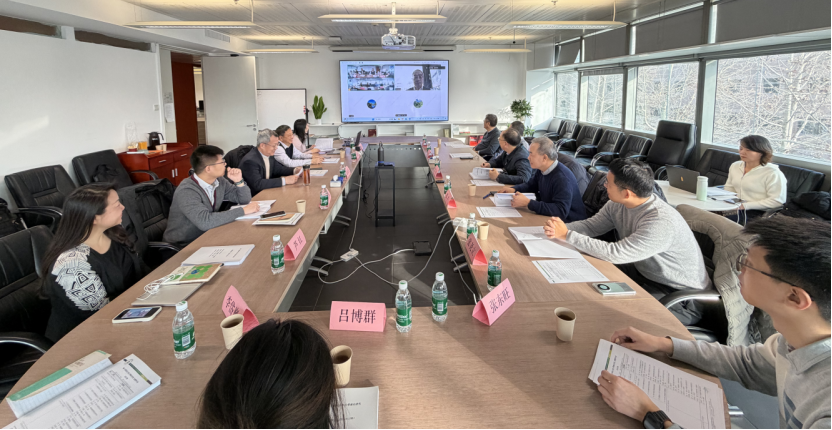
Professor Zhang Xiliang, Director of 3E Institute, introduced in his opening remarks that the SMR research is a core project under the China Carbon Neutrality Initiative (CCNI) of Tsinghua University. He pointed out that exploring the application of SMR to repower coal-fired power plants is of great significance for building a clean, low-carbon, safe and efficient energy system. Project leader, Zhou Sheng, a researcher from the institute, presented the overall project progress and achievements. Six team members reported achievements of each subproject, including the coal-fired power plant database and the Coal-to-Nuclear (C2N) potential assessment, the analysis of key influencing factors of C2N potential, the matching of technical parameters and safety standards for C2N conversion, typical cases of HTR-PM replacing coal-fired power, typical case of NHR200-II replacing coal-fired power, and the scenario simulation of the decarbonization paths for China’s power and heating sectors.
Shi Lishan, former Deputy Director General of the Nuclear Power Department and the New Energy Department of the National Energy Administration, currently Vice President of China Association for the Promotion of Industrial Development, Zhou Dadi, former Director General of Energy Research Institute of the National Development and Reform Commission, Zhao Yong, Chief Research Expert of China Huaneng Group, Zhou Meiwu, Deputy Chief Engineer of the Clean Energy Technology Company of China Guangdong Nuclear Power Group, Zhang Ping and Xie Heng, researchers from the Institute of Nuclear and New Energy Technology of Tsinghua University, and Zhang Yaoli, Associate Professor from the Energy College of Xiamen University, listened to the reports of the research team. The experts unanimously agreed that the research contents of this project were rich, the research methods were advanced, and the research results filled the gap in the field of promoting low-carbon energy transformation through C2N conversion in China, providing important guidance for the development of C2N from concept to practice. The experts expected the research team to continue the research on C2N, and put forward valuable suggestions on the research directions for next step.